
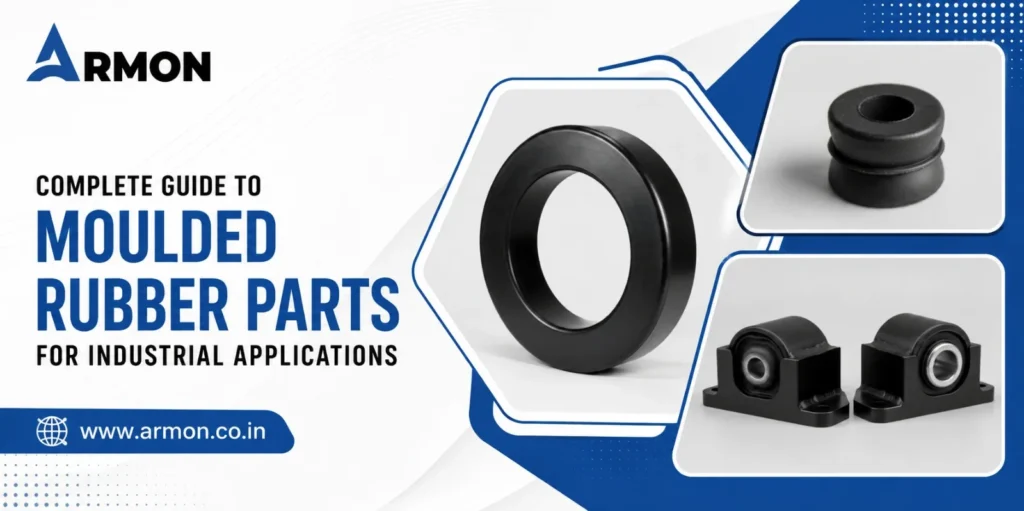
Introduction to Moulded Rubber Parts
In today’s industrial landscape, reliability, durability, and precision are critical for ensuring smooth operations. One component that plays a silent yet indispensable role across multiple industries is Moulded Rubber Parts. From sealing systems in automotive engines to vibration-dampening components in heavy machinery, these engineered rubber products help maintain efficiency, safety, and performance.
Industries such as automotive, irrigation, fluid handling, pumps, compressors, HVAC systems, and industrial machinery depend heavily on high-quality rubber components. From preventing fluid leakage and minimizing vibration to absorbing impact and safeguarding critical equipment, moulded rubber products play a vital role in modern industrial and engineering applications.
What Are Moulded Rubber Parts?
Moulded Rubber Parts are precision-engineered components manufactured by shaping rubber compounds into specific designs using specialized moulding processes. These components are developed to meet exact dimensional and performance requirements, making them suitable for demanding industrial environments.
Common examples include:
- O-Rings
- Rubber Seals
- Gaskets
- Washers
- Grommets
- Bushings
- Valve Diaphragms
- Rubber Sleeves
- End Caps
- Custom Engineered Components
These products are designed to perform under challenging conditions such as high temperatures, pressure fluctuations, chemical exposure, moisture, and continuous mechanical stress.
Why Moulded Rubber Parts Are Essential in Modern Industries
Industrial equipment consists of hundreds of interconnected components working together. Even a small failure in a sealing or cushioning component can lead to equipment downtime, fluid leaks, product loss, and expensive maintenance costs.
This is where Moulded Rubber Parts play a crucial role by delivering reliable sealing, cushioning, and protection across industrial applications.
- Providing leak-proof sealing
- Minimizing vibration and noise
- Protecting equipment from contaminants
- Enhancing operational safety
- Increasing equipment lifespan
- Improving system efficiency
Their flexibility and adaptability make them suitable for a wide range of applications where metal or plastic components alone may not provide the required performance.
Understanding the Manufacturing Process
The quality and performance of moulded rubber products largely depend on the manufacturing process used.
Compression Moulding
Compression moulding is a widely adopted manufacturing process used to produce high-quality rubber components for various industrial applications. In this process, a pre-measured rubber compound is placed into a heated mould cavity and compressed until it takes the desired shape.
This method is ideal for:
- Medium to large components
- Low to medium production volumes
- Thick rubber parts
Transfer Moulding
Transfer moulding combines the advantages of both compression and injection moulding processes, offering improved precision and production efficiency.The rubber material is first heated and then transferred into the mould cavity under pressure.
Advantages include:
- Better dimensional accuracy
- Reduced material waste
- Suitable for complex geometries
Injection Moulding
Injection moulding is preferred for high-volume production and precision applications. The rubber compound is injected directly into closed moulds under controlled pressure and temperature.
Benefits include:
- Consistent quality
- Faster production cycles
- Tight tolerances
- High repeatability
Leading manufacturers such as Armon utilize advanced compression, transfer, and injection moulding technologies to deliver precision-engineered rubber components for industrial applications.
Common Materials Used in Moulded Rubber Parts
Selecting the right rubber material is crucial for achieving optimal performance.
Material | Key Properties | Common Applications |
NBR (Nitrile) | Oil and fuel resistance | Automotive seals, O-rings |
EPDM | Weather and ozone resistance | Irrigation systems, outdoor equipment |
Silicone | High-temperature stability | Medical and food-grade applications |
FKM/Viton | Chemical resistance | Industrial sealing solutions |
NBR Rubber
Nitrile rubber offers excellent resistance to oils, fuels, and lubricants. It is widely used in automotive and hydraulic systems.
EPDM Rubber
EPDM performs exceptionally well in outdoor environments. Its resistance to UV radiation, moisture, and ozone makes it ideal for irrigation and water management applications.
Silicone Rubber
Silicone rubber offers outstanding flexibility and temperature resistance, making it widely used in applications that require consistent performance under varying thermal conditions.
FKM/Viton Rubber
FKM provides superior chemical and heat resistance, making it the preferred choice for demanding industrial applications.
Types of Industrial Moulded Rubber Components
O-Rings and Seals
O-rings are among the most commonly used sealing solutions in industrial equipment. They prevent leakage of liquids and gases while maintaining pressure integrity.
Applications include:
- Hydraulic systems
- Pneumatic equipment
- Pumps
- Compressors
- Automotive assemblies
Gaskets and Washers
Rubber gaskets create reliable seals between mating surfaces. Washers help distribute loads and reduce vibration in assemblies.
Grommets and Bushings
Rubber grommets protect cables and hoses from abrasion, while bushings isolate vibration and reduce noise in mechanical systems.
Diaphragms and Valve Components
Diaphragms are critical for flow control systems and pressure regulation applications. They offer flexibility, responsiveness, and durability in demanding operating conditions.
Industrial Applications of Moulded Rubber Parts
Automotive Industry
The automotive sector relies heavily on Moulded Rubber Parts for sealing, vibration control, fluid management, and safety systems. Components such as engine mounts, bushings, grommets, seals, and O-rings contribute significantly to vehicle performance and durability.
High-quality rubber components help:
- Reduce noise and vibration
- Improve fuel efficiency
- Enhance passenger comfort
- Increase vehicle lifespan
Irrigation and Water Management
Water conservation and efficient distribution systems depend on reliable sealing components. Rubber rings, gaskets, diaphragms, and seals help prevent leakage and ensure consistent performance in irrigation networks.
Manufacturers like Armon serve irrigation applications with precision-engineered rubber solutions designed for durability and long-term reliability.
Pumps, Compressors and HVAC Systems
Industrial pumps and compressors are designed to operate in high-pressure environments where reliability and performance are critical.Rubber seals, gaskets, and diaphragms ensure leak-proof operation while minimizing maintenance requirements.
HVAC systems also utilize rubber components for vibration isolation and efficient airflow management.
Heavy Machinery and Equipment
Construction equipment, mining machinery, and industrial production systems depend on rubber moulded products for shock absorption, sealing, and vibration damping.
Benefits include:
- Improved equipment protection
- Reduced wear and tear
- Lower maintenance costs
- Increased operational uptime
Key Benefits of Moulded Rubber Parts
The popularity of Moulded Rubber Parts continues to grow because of their numerous advantages:
Excellent Sealing Performance
Rubber provides a flexible and effective barrier against fluids, gases, dust, and contaminants.
Vibration and Shock Absorption
Rubber’s natural elasticity helps reduce vibration, noise, and impact forces.
Chemical Resistance
Specialized compounds can withstand oils, fuels, chemicals, and harsh industrial environments.
Cost-Effective Solution
Compared to many alternative materials, rubber components offer outstanding performance at a competitive cost.
Long Service Life
High-quality moulded rubber products maintain their functionality even under demanding operating conditions.
How to Choose the Right Moulded Rubber Parts Manufacturer
Selecting the right supplier is essential for ensuring consistent product quality and long-term reliability.
Consider the following factors:
- Industry Experience
- Material Expertise
- Advanced Manufacturing Capabilities
- In-House Testing Facilities
- Quality Assurance Systems
- Custom Engineering Support
- On-Time Delivery Performance
A reliable manufacturer should offer end-to-end support, including material selection, tooling development, prototyping, testing, and large-scale production.
Why Armon is a Trusted Partner for Industrial Rubber Components
Armon has established itself as a leading manufacturer of Moulded Rubber Parts by combining advanced manufacturing technologies, material expertise, and stringent quality control systems. The company supports industries including automotive, irrigation, pumps, compressors, HVAC, and industrial machinery with customized rubber solutions.
Key strengths include:
- In-house compound engineering
- Compression, transfer, and injection moulding capabilities
- Automated inspection systems
- Comprehensive quality testing
- Custom tooling and prototyping support
- Scalable production capabilities
- Reliable supply chain management
With a focus on precision, durability, and customer satisfaction, Armon delivers industrial rubber components designed to meet demanding performance requirements.
Conclusion
Industrial equipment performs only as well as its smallest components. Moulded Rubber Parts may appear simple, but they play a vital role in sealing, vibration control, shock absorption, and equipment protection across countless applications. Their versatility, durability, and cost-effectiveness make them indispensable for industries ranging from automotive and irrigation to heavy machinery and fluid handling systems.
As industrial demands continue to evolve, partnering with an experienced manufacturer becomes increasingly important. Companies that invest in high-quality rubber components benefit from improved reliability, reduced maintenance costs, and enhanced operational efficiency. Whether you require standard sealing products or custom-engineered solutions, choosing the right manufacturing partner can make a significant difference in long-term performance.